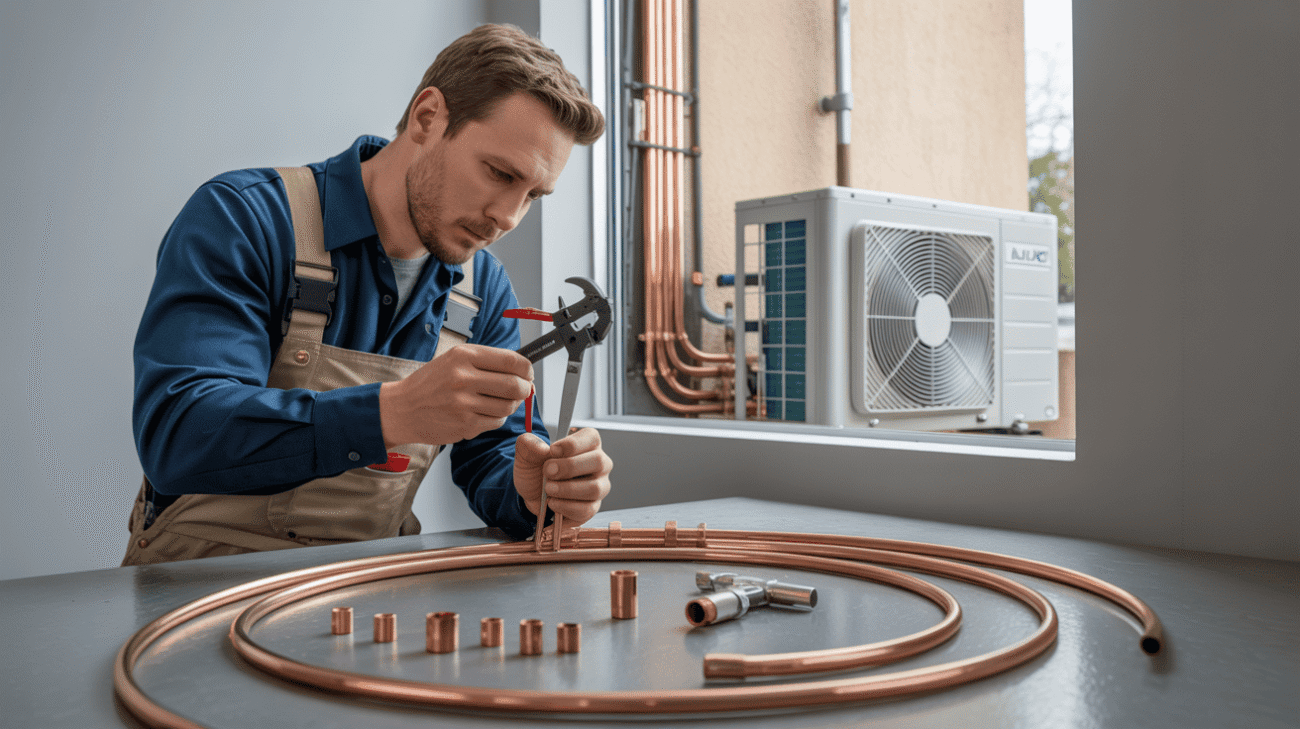
The performance of a cooling system depends heavily on the design and installation of its components, and one often-overlooked factor is the size of the line set connecting the indoor and outdoor units. These lines carry refrigerant throughout the system, and their diameter and length directly influence the system’s ability to transfer heat efficiently. A line set that is too small can restrict refrigerant flow, forcing the compressor to work harder, consuming more energy, and failing to maintain the desired temperature. Conversely, an excessively large line set may cause the system to cycle inefficiently, creating unnecessary wear on components. Ensuring that the line set is properly sized allows the system to operate at its intended capacity, reducing energy waste, extending equipment lifespan, and maintaining consistent cooling performance in varying environmental conditions.
Proper Line Sizing Impacts Efficiency
- Avoiding System Line-Setting Inconsistencies
Incorrect line set sizing can place significant strain on the entire cooling system, leading to inconsistent temperature control, higher energy bills, and an increased risk of mechanical failure. Refrigerant must flow smoothly through both the liquid and suction lines to maintain stable pressure and temperature throughout the system. When the diameter of the manufacturer’s lines does not match manufacturer-specific heat-transfer specifications, pressure increases, reducing heat-transfer efficiency and forcing the compressor to operate outside its optimal range. This can lead to temperature fluctuations within the living space, making some rooms cooler or warmer than intended. Proper planning and installation are essential to prevent these issues, as a correctly sized line sets ensures that the system circulates refrigerant at the appropriate rate, maintains stable pressures, and delivers uniform cooling performance across the entire space, avoiding unnecessary wear and operational inefficiencies.
- Maintaining Energy Efficiency
Energy is closely related to the system’s capacity and the cooling system’s capacity to move refrigerant effectively. A line set that is too small creates resistance within the system, causing the compressor to work longer and use more electricity to achieve the same cooling output. This not only increases operational costs but also places additional heat load on the mechanical system, shortening its lifespan. A line set that is too large, while less common, can lead to refractive velocity issues, reducing the system’s ability to maintain consistent pressure and temperature cycles. Selecting the correct diameter and length allows the system to operate under normal load conditions and peak demand, maximizing cooling output while minimizing power consumption. When the refrigerant level increases, the system achieves higher energy efficiency, maintaining comfort levels without excessive strain or wasted energy.
- Supporting Long-Term Reliability
The longevity of a cooling system is directly influenced by the proper sizing of its line set. Systems operating with incorrectly sized lines experience pressure imbalances that can accelerate wear on compressors, valves, and other components. Over time, these stresses can result in failures, leaks, or costly repairs. Additionally, improper sizing may require the system to cycle more frequently or operate at higher pressures, both of which contribute to mechanical fatigue. Correctly sized line sets reduce these stresses by allowing refrigerant to circulate, thereby establishing design velocities and pressures and maintaining stable operating conditions. Ensuring that line sets are dimensioned according to manufacturer recommendations pr. It protects the cooling performance and protects major system components, ultimately preserving the investment in the equipment while reducing downtime and maintenance costs.
- Improving Indoor Comfort
Comfort within a cooled space depends on consistent temperature distribution and efficient operation. Improper line set sizing can create uneven cooling, resulting in hot or cold spots in different areas of the home or building. Rooms located farther from the outdoor unit may receive undersized refrigerant flow if the lines are too small or excessively long, reducing cooling capacity in those areas. Conversely, lines that are too large can disrupt the balance of refrigerant circulation, causing overcooling in some spaces and undercooling in others. Proper line set selection ensures that the system delivers uniform cooling throughout the property. By supporting steady refrigerant flow and consistent pressure, the system can maintain the desired temperature across all zones, ensuring overall comfort and preventing occupant complaints or adjustments.
- Facilitating System Maintenance
A cooling system with correctly sized line sets is easier to maintain and troubleshoot. Technicians rely on predictable refrigerant flow, pressure readings, and temperature differences to accurately diagnose performance issues. Systems with undersized or oversized lines may produce irregular readings, making it more difficult to identify the root causes of problems. When line sets are properly sized, maintenance tasks such as pressure checks, refrigerant charging, and system inspections can be performed with confidence, knowing that measurements reflect the intended operational parameters. This not only simplifies routine maintenance but also helps detect potential issues before they escalate into serious failures. A system that operates predictably allows for smoother servicing and ensures long-term reliability, protecting both performance and investment.
Line Set Selection Ensures Performance
Choosing the correct line set size is a critical factor in the overall performance, efficiency, and reliability of any cooling system. Properly sized lines maintain consistent refrigerant flow, prevent mechanical strain, support energy efficiency, and promote even cooling throughout the space. Systems with appropriately dimensioned line sets experience fewer breakdowns, require less frequent repairs, and perform more consistently in indoor environments. Neglecting line set specifications can result in increased energy use, component wear, and uneven system performance, diminishing the system’s value. Careful selection and installation of line sets provide a foundation for reliable, efficient, and long-lasting cooling performance that meets the demands of modern living.
