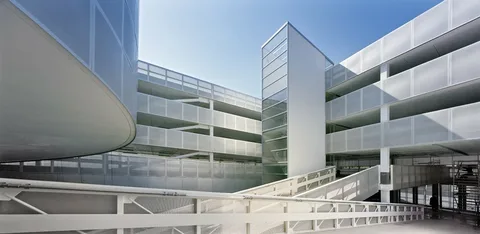
A well-constructed parking garage provides drivers with easy access and protection for their vehicles. Some modern parking designs feature structural improvements for long-term durability and easy navigation for all users. Here is more information on the evolution of parking garage architecture:
Site Planning
Planning and demand analysis help determine the design of a parking garage. An early analysis of peak-demand conditions may identify likely dispersal times of vehicles, which in turn yields specified queue capacities. Design elements accommodate site access, such as surrounding land uses, and this helps to support traffic flow. Planning vehicle flow around these site parameters early in the project addresses key development factors. Site selection factors in traffic flow and the facility design before structural detailing begins.
Structure Layouts
As architecture evolved away from a ramp-heavy approach, level floors started to replace some sloped decks, favoring adaptability driven by functional design. These level-floor designs may provide load-bearing capacity for conversion to retail, office, or warehouse space. Flat floors also enable the installation of vehicle lifts or hoist systems, and they support flexible storage configurations. Some modern garage structural systems are based on a clear-span framework that increases drive aisle width. The long-span framing helped to reduce the number of columns within floor plates, streamlining parking circulation.
The evolution of garage architecture helps support facility maintenance, operations, and personnel management. Newer garage designs may include integrated accessible inspection paths. Interconnected routes that link stairs, roof level, and lighting circuits enable maintenance teams and auditors to conduct walk-throughs without interrupting garage operations. Some garages may include advancements in the garage floors, such as optimally placed drainage channels, to protect structural areas from excessive water damage.
Garage Access Systems
System upgrades allowed architects to replace traditional gatehouses, designed for cashiers who hand out paper tickets and collect fees, with lane equipment placed at entry pedestals. Modern parking garage access systems also support contactless entry and exit methods; this helps reduce delays during peak traffic periods. Digital payment systems and automated ticket dispensers allow drivers to enter and leave facilities more efficiently, so they avoid having to stop and pull out cash. Some parking facilities integrate mobile payment applications and license plate recognition systems to improve traffic flow and reduce congestion at entry points.
Multi-lane entry and exit systems support higher vehicle volumes, and this can minimize backups near busy streets and intersections. Automated systems also allow operators to monitor occupancy levels and regulate access based on garage capacity. These upgrades may improve convenience for daily commuters, visitors, and residential tenants while helping parking facilities maintain organized traffic circulation throughout the structure.
Wayfinding Elements
Colors that coordinate with the structural bays help divide parking floors into zones. Pedestrian pathways may be posted at the entrances and exits to help people navigate the building and locate stairwells and elevators. Architecture sets objectives that align wayfinding with the overall design. That includes sightline planning of signage and the placement of entrances relative to the street. An integrated wayfinding feature can help enhance a parking facility by making it easy for drivers to navigate the garage and save time. Some garages have digital signs that help direct drivers to available stalls. Real-time occupancy data can be displayed on signs, so drivers quickly see if a garage is full.
Book a Parking Garage Today
Whether modern or traditional, architecture can combine structural integrity and aesthetic appeal to create efficient, accessible parking spaces. Integrating current technologies helps aid management efficiency; it also provides patrons with a reliable parking experience. Good lighting and sustainable design features promote usability, appeal, and environmental objectives. Visit a parking garage today.
