Heating and cooling problems can start with small changes, such as weak airflow, uneven heating or cooling, strange sounds, short cycles, or higher utility bills. HVAC contractors diagnose these issues through a careful process rather than guessing. They look at how the system starts, runs, moves air, controls temperature, and responds to the thermostat. A clear diagnosis matters because the same symptom can have several causes. Warm air from vents, for example, may be due to airflow issues, refrigerant problems, dirty coils, or electrical faults. Proper testing helps find the real problem before repairs begin.
What Technicians Review First
- Listening to Symptoms and System History
The first step in diagnosing heating and cooling problems is understanding what the homeowner has noticed. An HVAC contractor may ask when the issue began, whether it occurs at certain times of day, and whether the system has recently undergone maintenance or repairs. These details help narrow the search before any tools are used. A unit that runs constantly may have a different issue than one that shuts off too quickly. A noisy outdoor unit may indicate a fan, motor, or loose component, while weak airflow may originate inside the home. Homeowners in Vero Beach may also experience high cooling demand, humidity, and long run times, which can reveal problems more quickly. By connecting symptoms with system history, the contractor can decide which areas to test first. This saves time and helps avoid replacing parts that are not causing the comfort problem.
- Checking Airflow and Indoor Components
Airflow is one of the most important parts of HVAC diagnosis because poor air movement can affect both heating and cooling. A contractor may inspect the air filter, return vents, supply registers, blower motor, evaporator coil, and ductwork. A dirty filter can restrict air enough to reduce comfort, freeze a cooling coil, or strain the blower. Blocked vents or leaking ducts can make some rooms feel too hot while others stay too cool. The indoor coil may also collect dust, which limits heat transfer and makes the system work harder. During this part of the visit, the contractor may compare airflow from different rooms and check whether air is returning to the system properly. This helps identify whether the issue is with the equipment, the duct system, or a simple restriction. Airflow checks are often early in the process because many comfort complaints begin with circulation problems inside the home.
- Testing Electrical Controls and Safety Parts
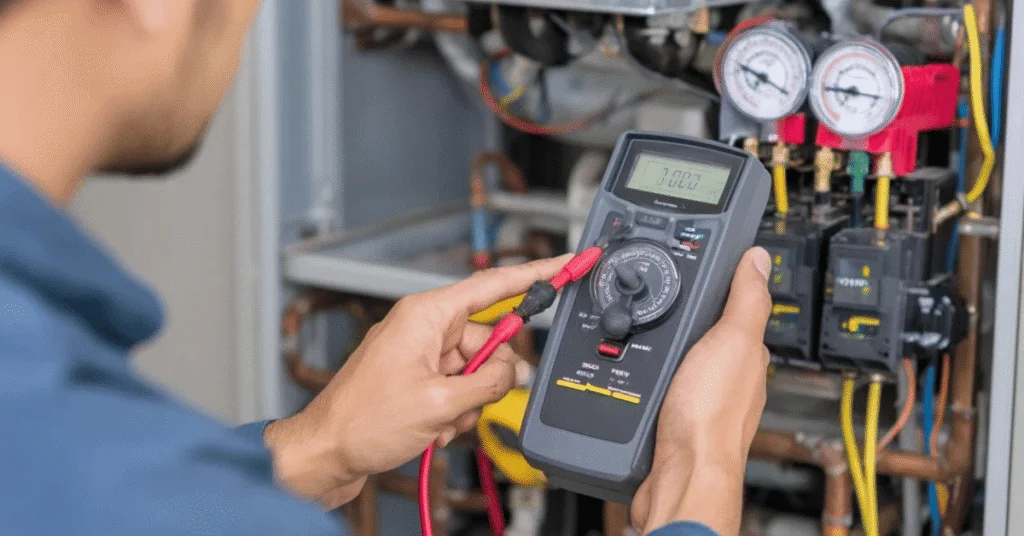
Heating and cooling systems rely on many electrical parts to operate correctly. A contractor may test the thermostat, control board, wiring, relays, contactors, capacitors, motors, limit switches, and safety controls. If one part fails or weakens, the system may stop, start slowly, cycle briefly, or respond at the wrong time. A weak capacitor can make a motor struggle to start. A worn contactor can interrupt power to the outdoor unit. A faulty thermostat can send the wrong signal even when the equipment itself can run. Electrical testing is important because many problems cannot be confirmed by sight alone. Contractors use meters and system readings to safely check voltage, current, and signal flow. This helps separate a true equipment failure from a control issue. When electrical problems are detected early, repairs may prevent greater damage to motors, compressors, or heating components that rely on steady power and proper control.
- Measuring Heat Transfer and Performance
After airflow and electrical checks, HVAC contractors often measure how well the system heats or cools. For air conditioners and heat pumps, this may include checking the temperature difference between return and supply air, inspecting refrigerant lines, reviewing coil condition, and looking for signs of frost, oil, or pressure concerns. For heating systems, the contractor may check burner operation, ignition, airflow temperature, safety response, and venting where applicable. These readings show whether the system is moving heat as intended. Poor performance may result from low refrigerant levels, dirty coils, airflow restrictions, aging parts, or equipment struggling under demand. The goal is to compare symptoms with actual measurements. If the thermostat indicates the system should be cooling, but the supply air isn’t dropping enough, the contractor knows that more testing is needed. Performance readings help create a clearer repair plan and reduce the chance of treating only the surface symptom.
Clear Diagnosis Leads to Better Repairs
HVAC contractors diagnose common heating and cooling problems by combining homeowner details, airflow checks, electrical testing, safety reviews, and performance measurements. This process helps identify the real cause of poor comfort instead of relying on quick assumptions. A clear diagnosis can prevent unnecessary repairs, reduce repeated service calls, and help the system run with less strain. When rooms feel uneven, energy bills rise, or the equipment sounds different, a careful inspection can reveal what is happening inside the system. Better information leads to better repair choices and more dependable comfort through changing weather.
