Introduction
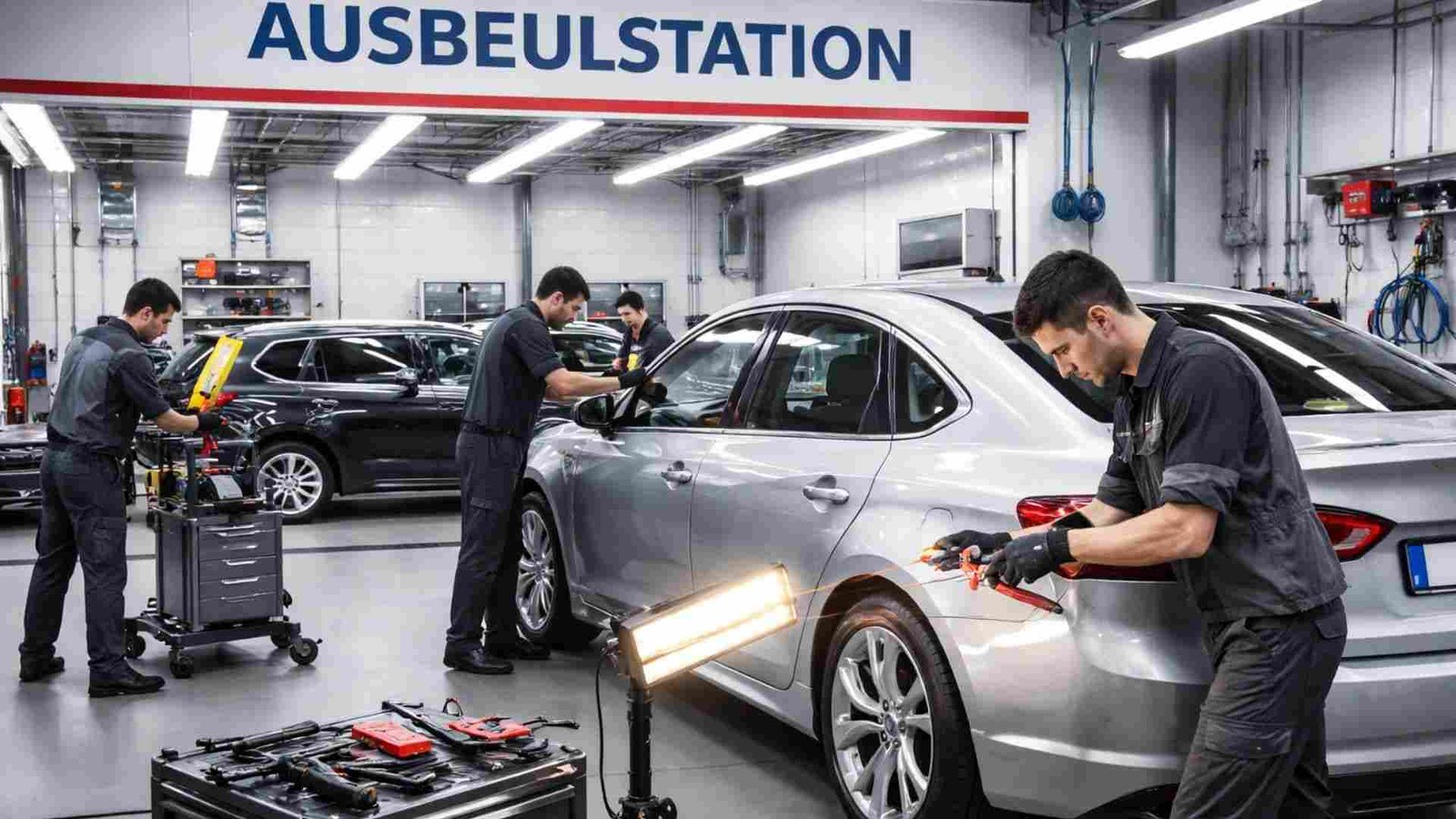
An Ausbeulstation is a professional workstation designed to repair vehicle dents and minor body damages without traditional painting or heavy bodywork. The word comes from German: “ausbeulen” means “to remove a dent,” and “station” refers to a dedicated work area. Essentially, it is a specialized setup combining tools, lighting, and techniques to restore vehicle surfaces efficiently.
This concept is essential in modern automotive repair. Unlike traditional body shops that often rely on fillers and repainting, an Ausbeulstation uses paintless dent repair (PDR) methods, preserving the car’s original paint, reducing repair time, and saving costs. Originating in German workshops, it reflects precision, efficiency, and care for factory-quality finishes. Today, the concept has spread internationally, used by professional mechanics, mobile repair units, and DIY enthusiasts seeking professional results.
The Meaning Behind Ausbeulstation
Breaking down the term helps understand its purpose. “Ausbeulen” translates to “to remove a dent,” highlighting the main function. “Station” suggests a dedicated, organized workspace equipped with specialized tools and lighting for precise dent repairs.
What sets an Ausbeulstation apart from a typical body shop is its focus on preserving paint and minimizing intervention. Traditional bodywork often involves sanding, filler, and repainting, which can lower resale value. In contrast, an Ausbeulstation uses controlled PDR techniques to reshape metal from the inside, keeping surfaces smooth and maintaining the car’s original finish. Its organized workflow, combined with high-quality tools and lighting, ensures accuracy, efficiency, and professional results.
History & Evolution of the Ausbeulstation
The Ausbeulstation concept started in Germany, where automotive workshops emphasized precision and quality. Early stations had basic tools and lighting, allowing small dents to be repaired without repainting. As vehicle designs became more complex and PDR methods became popular, the concept evolved into fully equipped, modern workstations.
By the late 20th century, stations included LED lights, reflection boards, and specialized PDR rods, capable of handling steel and aluminum panels. Over time, the idea spread globally, with workshops and mobile units adopting similar setups. Modern Ausbeulstation systems now combine advanced technology, ergonomic design, and professional-grade tools to meet the demands of contemporary automotive repair.
How an Ausbeulstation Works
The workflow of an Ausbeulstation ensures precise and efficient dent repair.
Inspection & Damage Assessment
The first step is a detailed inspection using LED lights and reflection boards. This identifies the size, depth, and location of the dent, allowing technicians to plan the best repair approach. Accurate assessment reduces errors and prevents damage to the paint.
Preparation of the Work Area
A clean and organized workspace is critical. Tools are arranged, surfaces cleared, and lighting optimized for visibility. Proper preparation speeds up repairs and improves safety.
Dent Removal Process
Dent repair involves two main methods:
- Pushing metal from the inside using rods and hand tools.
- Pulling metal using glue tabs and studs to gently reshape the dent.
Paintless Dent Repair (PDR) ensures the original paint remains intact while restoring the panel’s shape.
Finishing & Surface Smoothing
After the dent is removed, the surface is smoothed using specialized tools. Reflection boards help identify imperfections, ensuring the panel meets factory standards.
Advantages Over Traditional Fixes
Using an Ausbeulstation offers multiple benefits:
- Minimal repainting: Preserves original factory paint.
- Faster turnaround: Less labor-intensive than traditional repairs.
- Cost-effective: Saves material and labor costs.
- Eco-friendly: Reduces chemical waste and VOC emissions.
Key Components of an Ausbeulstation
A professional setup includes:
- Dent removal rods & PDR tools – reshape metal without damaging paint.
- LED lights & reflection boards – highlight dents for precision.
- Glue pulling tools & tabs – pull dents from the surface safely.
- Stud welders/spotters – attach tabs securely during pulling.
- Measuring & diagnostic equipment – ensure accurate results.
- Safety equipment – gloves, eye protection, and ergonomic supports.
These components are essential for quality, professional results.
Types of Dents You Can Fix With an Ausbeulstation
An Ausbeulstation can handle:
- Parking lot dings caused by minor bumps.
- Hail damage, with multiple shallow dents.
- Minor collision dents from low-speed accidents.
- Creases and shallow deformities that need careful reshaping.
PDR methods often allow these dents to be repaired without repainting, keeping the vehicle’s finish intact
Benefits of Using an Ausbeulstation
Saves Money Compared to Traditional Body Repair
Repairs are faster and require fewer materials than sanding, filler, and repainting, reducing labor and costs.
Maintains Original Paint and Resale Value
Factory paint is preserved, keeping cars looking new and protecting resale value.
Faster Turnaround for Customers
Organized workflows and efficient tools shorten repair time, improving customer satisfaction.
Environmentally Friendly
Less paint and filler mean reduced chemical waste and a lower environmental footprint.
Ausbeulstation in Professional Workshops
Professional workshops invest in Ausbeulstation setups to improve workflow, efficiency, and profitability. Multiple technicians can work on different panels simultaneously, reducing repair times and increasing throughput. Proper setup with ergonomic design and quality tools ensures accurate, safe repairs while enabling premium service offerings.
DIY & Mobile Ausbeulstation Options
For enthusiasts or small business owners, mobile Ausbeulstation kits are an attractive option. DIY setups allow minor dent repairs at home, though they require skill and patience. Mobile units provide on-site services for fleets or remote clients. While convenient, they may not include all tools found in professional workshops.
Choosing the Right Ausbeulstation
Consider the following:
- Equipment quality & features: Durable, precise tools matter.
- Steel vs. aluminum compatibility: Modern cars often use aluminum panels.
- Budget: Balance performance with cost.
- Warranty & support: Ensure after-sales support.
- Recommended models: Professional units handle steel & aluminum; mid-range kits suit hobbyists.
Choosing the right station ensures efficiency and professional-quality repairs.
Comparison Table: Professional vs DIY Ausbeulstation
| Feature | Professional Setup | DIY / Mobile Setup |
| Tools & Equipment | Full set of rods, welders, PDR tabs | Limited PDR rods & glue tabs |
| Lighting & Visibility | LED reflection boards | Portable LED lights |
| Surface Accuracy | High precision | Moderate precision |
| Repair Speed | Fast, multiple technicians | Slower, single user |
| Cost | Higher upfront investment | Lower cost |
| Ideal Use | Workshops, mobile services | Home repairs, small jobs |
Common Mistakes to Avoid With an Ausbeulstation
- Overpulling or applying too much force.
- Skipping proper preparation.
- Ignoring safety guidelines.
Following recommended procedures ensures consistent, high-quality results.
Training & Skill Requirements
PDR techniques require practice and precision. Workshops offer courses for beginners and professionals covering tools, safety, and dent repair methods. Continuous learning is essential, especially as cars use new materials and advanced panel designs.
The Future of Ausbeulstation Technology
Digital tools, AI-assisted dent detection, and smart lighting systems are transforming Ausbeulstation setups. Sensors detect subtle dents and guide technicians, improving speed and accuracy. The future promises more efficient, precise, and widely accessible dent repair solutions.
FAQ’S
1. Can any car dent be repaired with an Ausbeulstation?
Most minor dents can, but extremely deep or sharp dents may require traditional bodywork.
2. Is paint always preserved?
Yes, paintless dent repair preserves the original finish in most cases.
3. How long does a typical repair take?
Small dents: ~30 minutes; larger panels: several hours.
4. Is it worth using at home?
Yes, DIY setups save costs and maintain vehicle aesthetics, but skill and patience are needed.
5. What are the essential tools?
LED lights, PDR rods, glue pulling tabs, and reflection boards
Conclusion
The Ausbeulstation has redefined dent repair. It combines precision, efficiency, and sustainability while preserving the original paint, saving time and costs. Whether used in professional workshops, mobile units, or DIY setups, it equips users to repair dents effectively. With evolving technology, Ausbeulstation setups are now an essential tool for modern automotive care.
Looking for more Article? Check out my website for the latest content.
